What Is AI Transcription and How Does It Work?
AI transcription is the process of using artificial intelligence to turn spoken language into written text. It works across recorded audio files, video content, and live speech. The output is a structured, readable transcript generated within minutes, without any manual typing involved.
Three core technologies power AI powered transcription services:
Automated Speech Recognition (ASR): Deep learning models listen to audio signals and map acoustic patterns to words. This is the foundation of any speech to text process.
Natural Language Processing (NLP): NLP helps the system understand context, so it can handle homophones, accents, domain-specific terms, and conversational phrasing accurately.
Large Language Models (LLMs): These models go beyond raw transcription. They generate smart summaries, detect different speakers, and extract action items from the raw transcript.
Together, these layers allow an ai transcription service to produce results that reflect not just what was said, but how it was structured. Smart Noter applies this multi-layer approach to deliver up to 99% accuracy across recordings in more than 98 languages, including detection, transcription, and translation within the same workflow.
Key Features of Modern AI Transcription Tools
Today's AI powered transcription tools go well beyond basic voice to text conversion. The most useful capabilities found in platforms recommended for ai meeting note taking include:
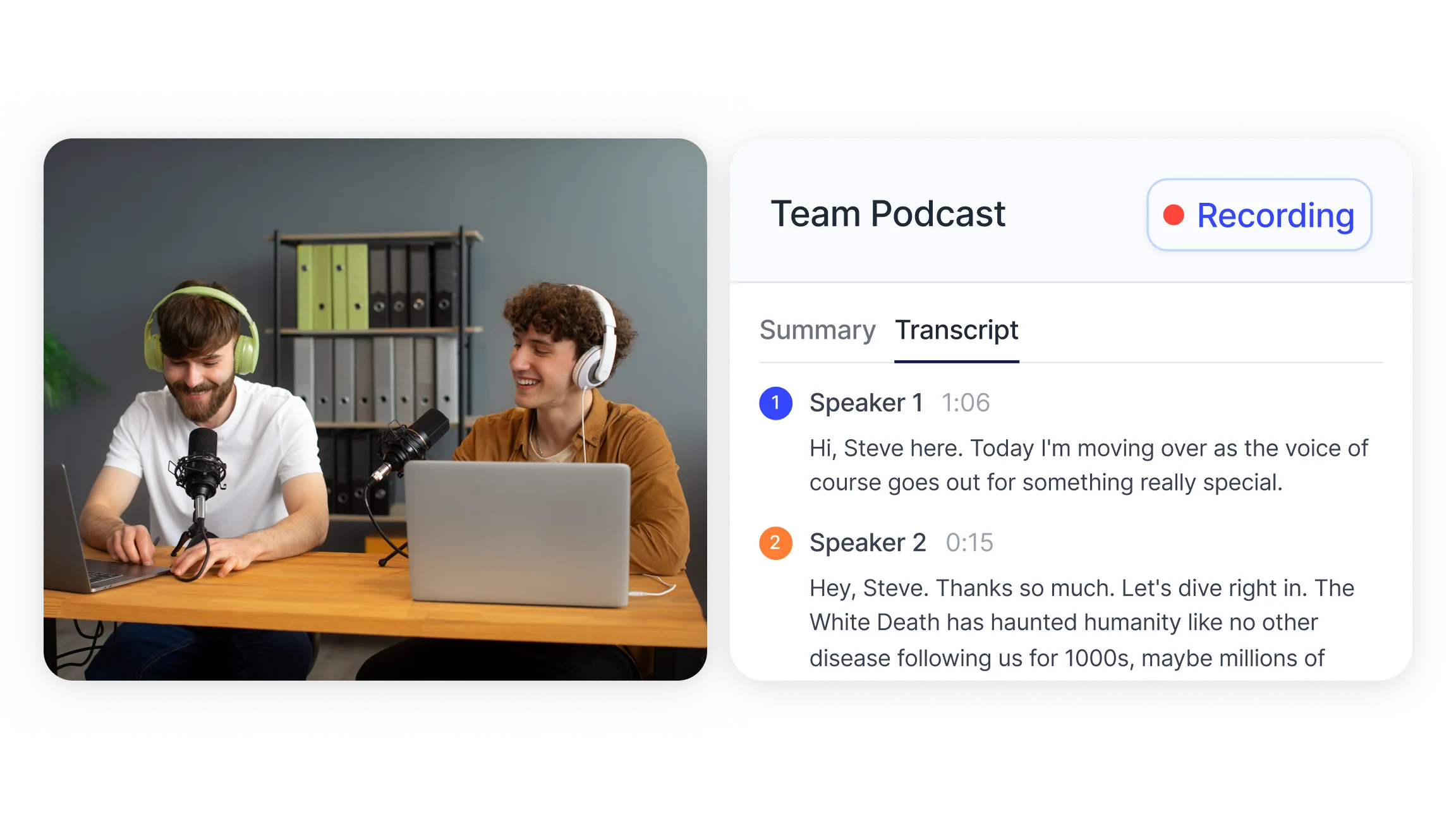
Speaker Recognition: Identifies and labels each participant separately in a conversation, making transcripts easier to follow in multi-person meetings or interviews.
Real-Time Transcription: Generates live text while a meeting, class, or event is in progress. This is useful for accessibility, live captioning, and immediate documentation.
Summarization and Action Items: Automatically extracts key points, decisions, and follow-up tasks from the full transcript, reducing review time significantly.
Audio to Text and Video to Text Processing: Converts both audio recordings and video files into written transcripts. Smart Noter supports audio to text and video to text processing for a wide range of file formats.
Translation: Produces transcripts or summaries in a different language from the source audio, supporting multilingual teams and global workflows.
Calendar and Platform Integrations: Smart Noter connects with Zoom, Google Calendar, and Outlook so recordings are captured and transcribed without switching between tools.
When users search for the best format for ai transcription output, the answer typically includes timestamped speaker-labeled text, exportable summaries, and searchable plain text. Smart Noter delivers all three as part of its transcription feature set.
Where AI Transcription Is Used?
AI audio transcription and ai video transcription are now standard tools across multiple industries. The most common use cases include:
Meetings and Team Collaboration Virtual meeting assistants join calls on platforms like Zoom or Google Meet, record the conversation, and generate a complete transcript with speaker labels. Attendees can stay focused on the discussion instead of taking notes. Smart Noter supports this workflow through its AI meeting note taker feature, which automatically produces organized meeting notes after each session.
Content Creation Podcasters, video producers, and journalists use ai transcript tools to convert interviews and recordings into text. This makes editing, subtitling, and repurposing content significantly faster. The audio to text and video to text features in Smart Noter are structured specifically for this workflow.
Education Lecturers and students use ai transcription free tools and full-featured platforms to create accurate class notes, review session recordings, and build accessible study materials. Real-time transcription also supports deaf and hard-of-hearing students through live captioning.
Legal, Healthcare, and Compliance Fields These industries require detailed documentation of conversations, consultations, and proceedings. AI transcript generators with high accuracy rates reduce the risk of transcription errors and make records easier to search and audit.
HR and Recruitment Interview recordings are transcribed and summarized automatically, helping HR teams review candidate responses and maintain consistent documentation across hiring processes.
Who Benefits Most from AI Powered Transcription Services?
AI transcription has shifted from a niche utility to a standard tool across professional and educational settings. With features like speaker recognition, real time output, unlimited transcription minutes, support for +98 languages, and integration with tools like Zoom and Outlook, AI powered transcription services now cover a wide range of documentation needs. Smart Noter brings these capabilities together in a single platform, handling everything from audio to text conversion to full meeting summaries. Whether the need is an ai transcription free starting point or a full ai transcription service for team wide use, the workflow remains consistent, structured, and accurate.
