Why Structured Documentation Matters in Modern HR?
Interviews generate large volumes of qualitative information that directly influence hiring decisions. Relying on handwritten notes or memory creates inconsistency and increases the risk of missing important candidate responses. Incomplete documentation makes it difficult to compare candidates fairly, track evaluation criteria, and maintain compliance records. Structured transcripts support consistency, transparency, and long term hiring quality across every stage of the process.
How AI Records and Transcribes Interviews?
AI powered transcription tools capture conversations from platforms such as Zoom, Microsoft Teams, or uploaded recordings. Speech recognition converts spoken responses into searchable text with speaker identification, so a recorded interview becomes a document that can be scanned in seconds rather than replayed in full. These systems typically support multilingual workflows and timestamped transcripts, allowing HR teams to revisit specific candidate answers without reviewing full recordings.
A Simple Workflow for Turning Conversations Into Records
The workflow follows a clear, repeatable sequence:
The interview is recorded through a video call, phone line, or in-person device.
Audio is converted into a timestamped, speaker labeled transcript.
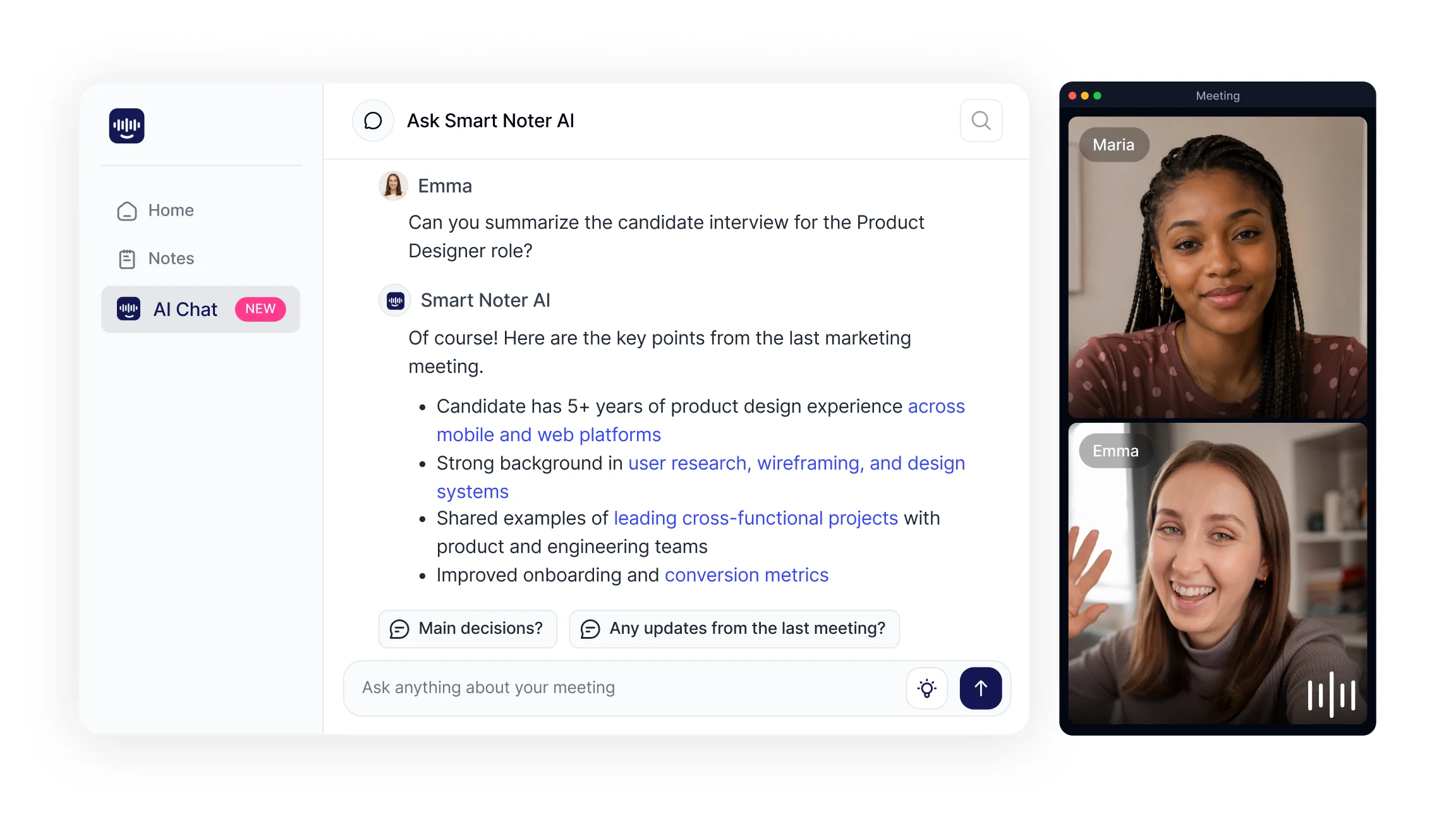
Key responses, themes, and follow up questions are organized into a structured summary.
The transcript and summary are stored in a searchable system for later review.
Structured workflows like this reduce manual documentation time and help hiring teams maintain consistent evaluation processes across every role they fill.
How AI Interview Documentation Supports the Full HR Lifecycle?
Removing manual note taking lets recruiters focus on the conversation itself rather than splitting attention between listening and writing. This shift supports better candidate engagement during the interview.
Structured summaries also improve decision making by making it easier to compare candidates objectively and spot patterns across interviews for the same role. Timestamped transcripts support compliance documentation, giving HR teams reliable records to reference for audits or regulatory requirements. Teams evaluating a transcript side by side for several candidates can apply the same criteria more consistently than teams working from scattered handwritten notes, which is one of the most common motivations behind ai tools for hr teams.
Interview transcription is only one part of a broader HR workflow. The same documentation methods extend into onboarding sessions, training programs, performance reviews, and exit interviews, giving HR teams a consistent way to capture conversations across the employee lifecycle.
Storing conversations across that lifecycle allows HR teams to analyze recurring feedback themes, measure training effectiveness, and identify retention risks earlier than annual surveys alone would reveal. Reviewing exit interview transcripts alongside earlier performance conversations, for example, can surface concerns that were mentioned but not acted on.
What to Watch Out For When Recording Conversations
Data privacy and candidate confidentiality are important considerations when recording interviews. Secure storage systems and clear consent processes should be in place before recording begins, and candidates should be informed that a session is being recorded.
Human review remains necessary to interpret candidate responses and validate AI generated summaries. Tone, hesitation, and context are not always captured accurately by transcription alone, so responsible use means treating AI output as a starting point rather than a final record.
Best Practices for Using AI Interview Transcription in HR
Combining structured interview workflows with transcription improves documentation accuracy and hiring consistency. Practices worth building into a standard process include:
Reviewing transcripts shortly after each interview while context is still fresh.
Using standardized evaluation criteria so transcripts are compared the same way across candidates.
Maintaining centralized storage systems rather than scattered personal files.
Platforms such as Smart Noter help HR teams turn recordings into structured summaries, maintain searchable documentation, and support consistent hiring workflows across distributed teams.
Building Structured Hiring Workflows With AI
Interview documentation helps HR teams move from fragmented notes to structured hiring workflows that support consistency, transparency, and faster decision making across recruitment. Structured documentation systems let HR teams make more confident hiring decisions while maintaining long term records of candidate interactions.
