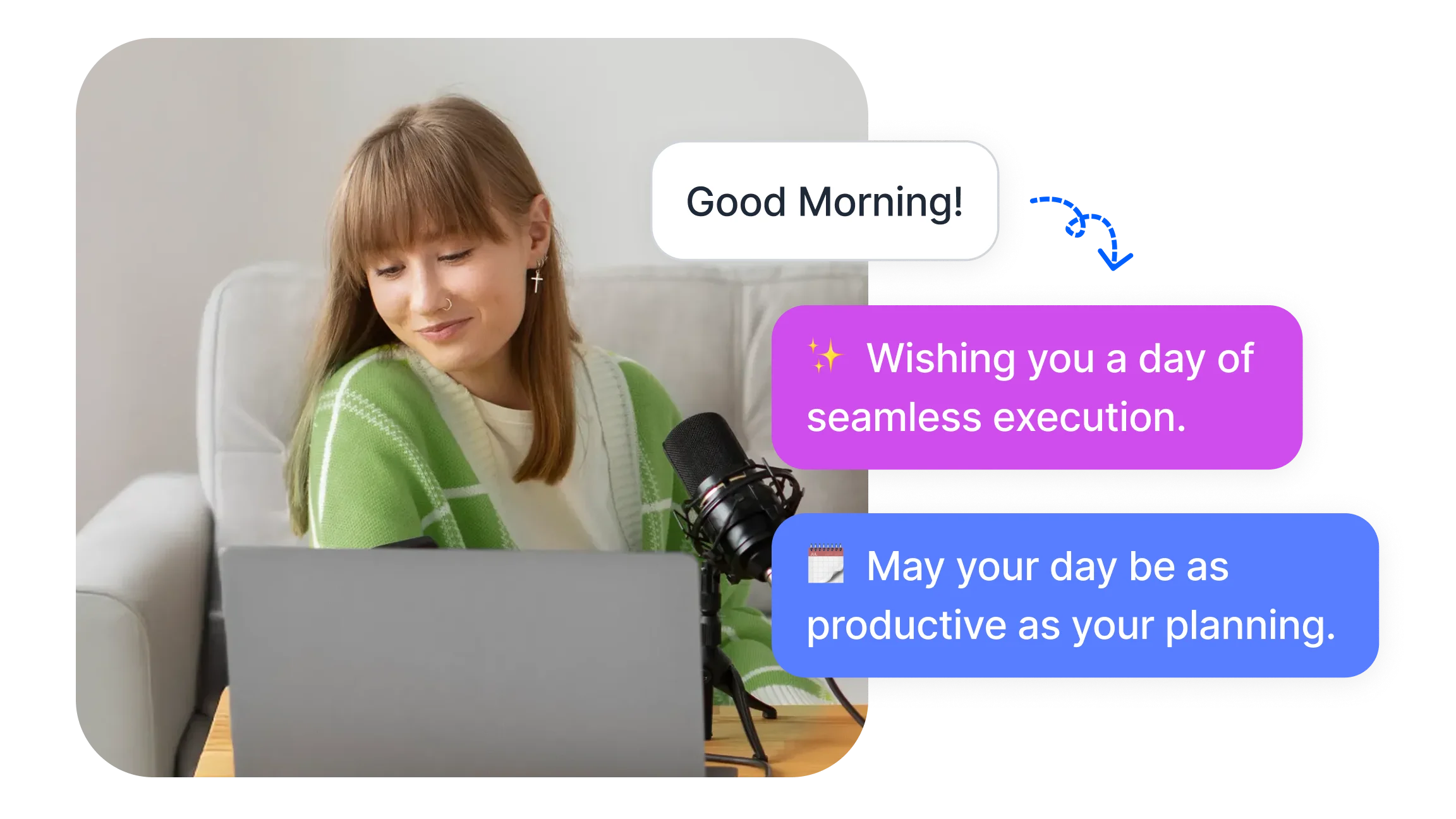
Why Good Morning Messages Matter in Professional Settings
Short morning greetings serve a practical communication function beyond courtesy. In remote and hybrid environments where informal in-person interaction is rare, a brief professional morning message signals availability, acknowledges the team, and sets a collaborative tone before the first meeting of the day.
Research consistently shows that employees who feel acknowledged and connected to their team at the start of the day report higher engagement and are more likely to communicate proactively about blockers or challenges. A good morning message from a manager, in particular, signals openness and availability that encourages the team to surface issues early rather than waiting for a scheduled check-in.
The key is keeping messages appropriate for the channel and the relationship. A message to a long-standing colleague can carry a warmer tone than one sent to a new client contact. The examples below are organized by context so the tone is already calibrated for the situation.
Daily Motivation and Energy Messages
These work well in team channels, morning standups, or as an email opener on a Monday or after a holiday. They set a productive tone without overpromising or using language that feels forced.
"Good morning. Today is a clean slate and a good opportunity to make measurable progress on what matters most."
"Morning, everyone. Let's bring focus and energy to today's priorities and keep things moving forward."
"Good morning. Every task completed today is a step toward a larger goal. Keep that in mind when the day gets busy."
"Morning. Small consistent efforts build the results we are all working toward. Let's have a productive one."
"Good morning. Today is worth showing up fully for. Let's make it count."
"Morning, team. New day, fresh start. Let's approach today's challenges with patience and focus."
"Good morning. Progress does not always look dramatic. Steady work today will pay off."
"Morning. Grateful to be working alongside people who take their work seriously. Let's have a great day."
"Good morning. One clear priority at a time. Let's move with intention today."
"Morning, everyone. Let's start the day with the kind of focus that makes meetings shorter and results better."
"Good morning. The goal today is not perfection but meaningful forward movement."
"Morning. Energy and attention are limited resources. Spend them on what actually moves the needle today."
"Good morning. Whatever is on your plate today, you have handled harder things. Keep going."
"Morning, team. Productivity is not about doing more. It is about doing the right things well. Let's aim for that today."
"Good morning. Set your intention for today before checking your inbox. It makes a difference."
"Morning. Clarity first, action second. Good morning and let's have a purposeful day."
"Good morning. Today's challenges are tomorrow's experience. Approach them accordingly."
"Morning, everyone. Showing up consistently is more valuable than showing up perfectly. Good morning."
"Good morning. What gets your best attention this morning will set the tone for the rest of the day."
"Morning. Let's make decisions today that we will be glad about by Friday."
Team Building and Collaboration Messages
Use these in shared team channels, group emails, or at the start of a collaborative session. They reinforce that the work is shared and that individual contributions matter to the group.
"Good morning, team. Grateful to work alongside people who bring both skill and commitment to the table."
"Morning, everyone. Let's support each other today and make the most of what we each bring to this project."
"Good morning. The strength of this team is in how we show up for each other, especially on the harder days."
"Morning, crew. Open to collaboration today. Reach out if you need input or a second perspective."
"Good morning. Let's keep communication clear and timely today so we can all move faster together."
"Morning, team. Checking in and ready to contribute. Let me know where I can help."
"Good morning, everyone. Grateful for the effort this team puts in every day. Let's have another productive one."
"Morning. Coordination today will make the rest of the week smoother. Let's stay aligned."
"Good morning. Quick wins are easier when we share them. Let the team know when something moves forward."
"Morning, team. Collaboration is most effective when we share context early. Let's do that today."
"Good morning. Today is a good day to check in with a colleague you have not connected with recently."
"Morning, everyone. Clear handoffs make the whole team faster. Let's be deliberate about that today."
"Good morning. The best work happens when people feel supported. Let's make sure that's the environment we are creating."
"Morning. If you are blocked on something, say so early. The team is here to help."
"Good morning. Shared goals require shared communication. Let's keep the loop open today."
Resilience and Support Messages
These are appropriate when the team has been through a difficult period, when deadlines have been missed, or when morale needs a practical reset rather than empty encouragement.
"Good morning. I know this week has been demanding. Acknowledge the progress you have already made before you look at what is still ahead."
"Morning, everyone. A difficult stretch does not erase the good work that came before it. Keep going."
"Good morning. Not every day will feel productive. Showing up and doing what you can is still valuable."
"Morning, team. If this week has been hard, it is okay to pace yourself today. Sustainability matters more than intensity."
"Good morning. Challenges at work are not a sign that something is wrong. They are a sign that the work is real."
"Morning. Do not let one rough day define your whole week. You have more capacity than yesterday's setbacks suggest."
"Good morning. Resilience is not about pretending things are fine. It is about continuing to work through what is not."
"Morning, everyone. If you are struggling today, reach out. Working through difficulty alone is rarely the most effective approach."
"Good morning. Progress is not always linear. Trust the process and the team around you."
"Morning. Deadlines and pressure are real, but so is the fact that you have navigated these before. Good morning."
"Good morning. Be kind to yourself and your colleagues today. Demanding work requires a supportive environment."
"Morning, team. It is okay if today is about maintaining, not advancing. That is still forward movement."
"Good morning. Recognize what went well yesterday before focusing on what needs to change today."
"Morning. The goal is not to do everything perfectly. The goal is to keep improving steadily."
"Good morning. Support is available. Use it."
Formal and Client-Facing Good Morning Messages
These are appropriate for external communication with clients, partners, or stakeholders where a professional and measured tone is required.
"Good morning. I hope the start of your week is going well. Looking forward to connecting with you today."
"Good morning. Thank you for your continued partnership. I hope today is productive for your team."
"Good morning. I wanted to reach out to confirm our meeting time and share the agenda in advance."
"Good morning. Following up on our last conversation and looking forward to moving things forward today."
"Good morning. Please let me know if there is anything you need from our side before our call this afternoon."
"Good morning. Sharing a brief update on project progress and the next steps we have planned."
"Good morning. I hope your day is off to a strong start. Happy to answer any questions ahead of today's session."
"Good morning. Thank you for your time this week. We appreciate your input and will follow up with next steps shortly."
"Good morning. Checking in ahead of our scheduled review and looking forward to a productive session."
"Good morning. I hope the rest of your week is smooth. Please reach out if there is anything we can clarify."
"Good morning. It was a pleasure connecting last week. Here is a brief summary of what we discussed and the agreed next steps."
"Good morning. Confirming the details of tomorrow's meeting and attaching the relevant documents for your review."
"Good morning. We appreciate your partnership on this project and look forward to today's discussion."
"Good morning. I wanted to send a brief note to ensure we are aligned before the deadline approaches."
"Good morning. Thank you for your patience during this process. We are on track and will update you by end of day."
Messages for Managers and Leaders
Managers who send morning messages set the tone for how the team communicates throughout the day. These are calibrated for a leadership voice: clear, supportive, and focused on outcomes rather than sentiment.
"Good morning, team. Today's priority is clear communication and timely handoffs. Reach out early if anything shifts."
"Morning, everyone. Availability for quick questions throughout the morning. Flag blockers as they come up."
"Good morning. Recognizing the effort from last week. Let's build on that momentum today."
"Morning. Focusing on supporting the team's priorities today. Let me know what you need."
"Good morning. Decisions made today should be documented. Let's make sure nothing critical falls through the gaps."
"Morning, team. Trust the plan we set. Adjust where needed and communicate changes early."
"Good morning. Today is a good day to confirm that everyone knows their priorities for the week."
"Morning. Supporting your focus today. If something is blocking progress, surface it now rather than later."
"Good morning. Recognition matters. If a colleague did great work recently, take a moment to say so."
"Morning, everyone. Accountability is not about blame. It is about making sure every commitment has an owner."
Messages for Remote and Hybrid Teams
Remote and hybrid professionals often begin their day without the natural social cues of an in-person office. A brief morning message in this context serves a functional purpose: it signals that the team is active, aligned, and accessible.
"Good morning from my end. I am logged in and available. Check-in at 10 for anyone who wants a quick sync."
"Morning, remote crew. If you are working across time zones today, please flag your availability windows in the channel."
"Good morning. For anyone working asynchronously today, summaries will be posted after each key meeting."
"Morning, team. Online and ready. Drop questions in the channel and I will get to them between meetings."
"Good morning. Starting the day with a clear head and a full inbox. Let's sort through priorities together."
"Morning. For those joining the call from different locations today, the agenda is in the calendar invite."
"Good morning, distributed team. Grateful for the effort it takes to collaborate across schedules and time zones."
"Morning. Async updates will be shared by midday. Respond in the thread so the whole team stays informed."
"Good morning. If you are working from a different location today, please note it in your status so the team can coordinate."
"Morning, everyone. Another day of productive remote work. Reach out whenever you need a response and I will get back to you promptly."
When and How to Use Good Morning Messages at Work?
Knowing which message to use in which context is as important as having the right words. A few practical guidelines help keep morning communication effective rather than cluttering shared channels.
Match the message to the channel A team Slack channel calls for a lighter, collaborative tone. An email to a client requires something more formal and specific. An internal message to a direct report can carry a supportive and direct tone without the formality required in external communication.
Keep it brief A good morning message is not a memo. One to three sentences is enough. The goal is to acknowledge the team, signal the day's focus, or set a tone. Anything longer starts to look like an announcement rather than a greeting.
Pair motivation with action The most effective professional morning messages connect to something specific: today's priority, an upcoming meeting, a recent achievement, or an available resource. Abstract encouragement without context lands less effectively than a message that ties positivity to something tangible.
Be consistent but not mechanical A morning message that arrives at the same time every day from the same person in the same format eventually blends into the background. Occasional variation in tone, focus, or format keeps the habit from becoming invisible.
Consider your audience A message that works for a long-standing internal team will not always translate to a new client relationship. Use the categories above as a guide: formal for external, supportive for teams under pressure, motivational for high-energy periods, and brief for busy channels.
For teams that start the day with a standup or morning meeting, Smart Noter's meeting summarizer captures what was discussed and distributes a structured summary automatically. Morning alignment that happens in a meeting becomes a searchable, documented record rather than a set of notes that four people wrote four different ways.
