What Is Manual Note Taking?
Manual note taking is the act of writing or typing information while a conversation or presentation is happening. It requires listening, identifying important points, and recording them by hand or on a device. Manual note taking depends on individual speed, attention, shorthand skills, and judgment about relevance.
In workflow terms, manual note taking splits attention between listening and recording. In fast conversations or dense lectures, the note taker can fall behind, miss details, or capture fragmented thoughts. After meetings, extra time is often needed to reorganize, clarify, or type up handwritten notes. Those follow up tasks can add notable overhead to daily workflows, especially when notes must be shared or archived.
What Is AI Note Taking?
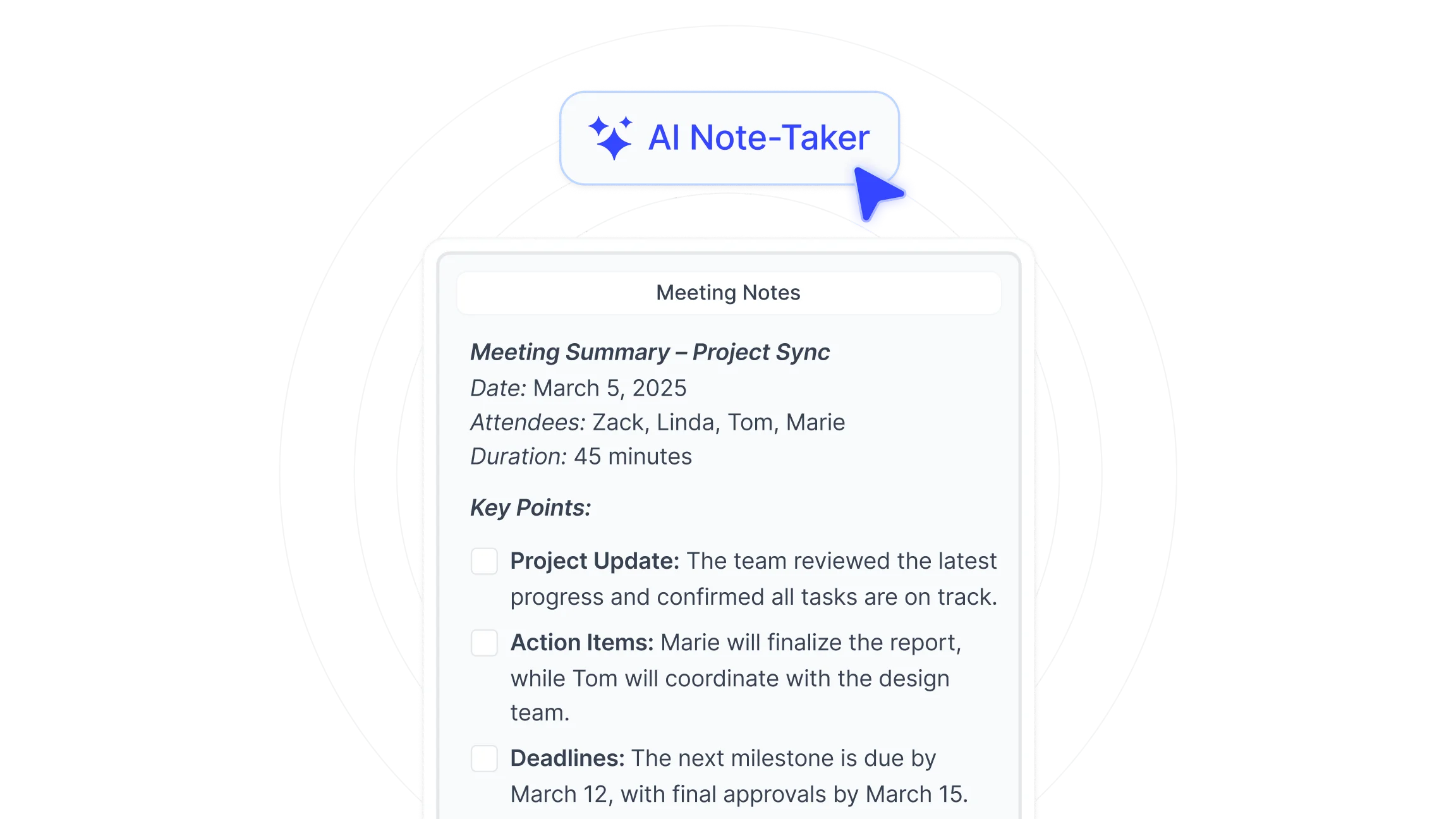
AI note taking refers to software that uses speech recognition and natural language processing to convert spoken words into text and produce structured summaries. These tools can record audio or join online meetings, generate full transcripts, and extract summaries, key topics, and action items for later review.
AI note taking cuts manual effort by automating transcription and summarization. A typical workflow records a meeting, lets the system produce a transcript and short summary, then reviews or shares the summary instead of rewriting notes. This shifts time from capture to verification and follow up, often shortening documentation cycles.
Manual Note Taking vs AI Note Taking: Key Differences That Affect Time
This section compares the two methods across factors that affect time use, workflow complexity, and follow up effort.
Speed And Capture Efficiency
Manual note taking speed is limited by handwriting or typing and the mental effort of listening while recording. In fast paced meetings, capturing everything accurately is difficult, causing gaps or fragmented notes. AI note taking provides real time transcription, continuously capturing spoken content so fewer details are missed. Real time transcription note taking reduces time spent trying to keep up and allows immediate reference to exact wording.
Accuracy And Information Coverage
Manual notes often omit details when attention is split or when speakers overlap, leading to later clarification or follow up. AI based tools capture full conversations, preserving phrasing, timestamps, and speaker segments. This fuller capture helps recover missed details during post meeting review and reduces time spent reconstructing what was said.
Memory And Cognitive Processing
Manual note taking encourages active processing: selecting and paraphrasing information can aid understanding and retention. Handwritten notes, in particular, are linked to deeper cognitive engagement. AI generated summaries and transcripts support reinforcement by providing concise recaps and searchable records. Reviewing structured AI summaries can speed up retrieval and cut time needed to revisit original material.
Organization And Retrieval
Manual notes usually need manual filing, indexing, and summarizing to be useful later. Searching through handwritten or scattered digital notes can be time consuming. AI generated transcripts and meeting summaries are typically searchable and can be organized by keywords, dates, or topics, enabling faster retrieval and reducing time spent locating past meeting details.
How To Choose The Right Note Taking Method Based On Workflow Needs
Choice depends on context and goals. For academic learning or deep comprehension, manual note taking supports active processing and may improve long term recall. In fast professional meetings, client calls, or interviews where complete records matter, AI note taking for meetings saves time and offers more reliable capture. For collaborative team workflows, combining manual highlights with AI transcripts, an intentional hybrid note taking approach, balances cognitive benefits with documentation efficiency. Consider meeting speed, need for verbatim records, time available for follow up, and searchability when deciding.
Using AI Note Taking Tools To Improve Documentation Workflows
Structured AI note taking tools support recording, transcription, summarization, and organized storage. A common workflow:
Record the meeting or upload audio/video.
Automatically transcribe spoken content with timestamps and speaker labels.
Generate a concise meeting summary and list of action items.
Review and edit the summary as needed.
Tag, store, and search transcripts for later reference.
Smart Noter follows this structured model to support recording, converting speech to text, generating summaries, and organizing notes into searchable formats. Practical steps include recording a conversation, reviewing a short meeting summary to confirm key decisions, and using keyword search to retrieve related past meetings. Structured AI workflows reduce time spent rewriting notes and help maintain consistent documentation across projects.
