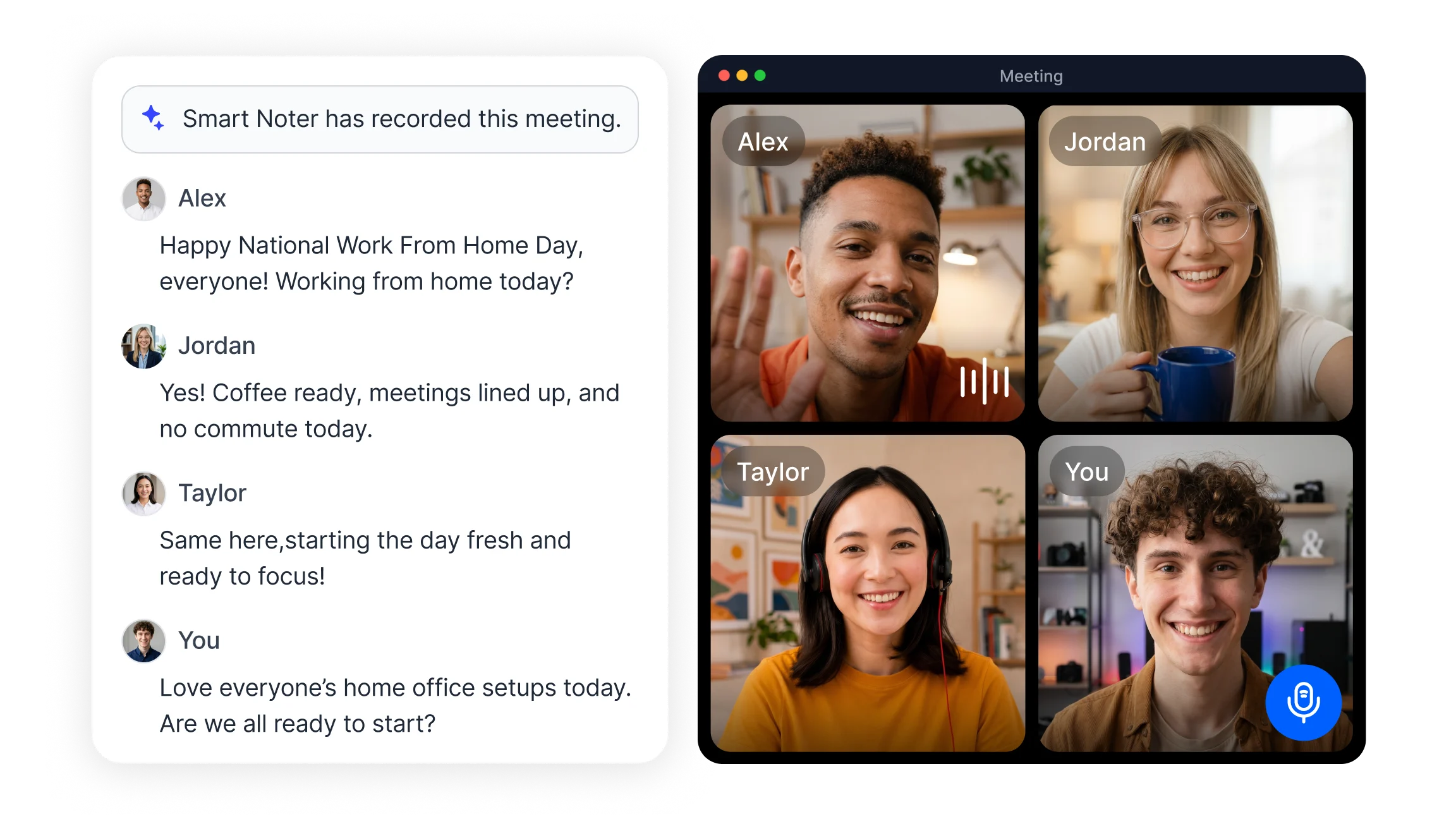
National Work From Home Day 2026: History and Remote Work Tips

National Work From Home Day highlights how flexible work moved from occasional remote days to a structured element of modern work culture. Observed annually in late June, the day draws attention to hybrid and remote workflows as they expand across industries and shape daily work practices.

Date June 22, 2026 Β· Anna Hanks

When Is National Work From Home Day and What Does It Mean?

National Work From Home Day in 2026 is observed on June 26, typically falling on the last Thursday in June each year. The day is a workplace awareness event that highlights flexible work, reduced commuting, and modern digital collaboration.

The date shifts each year because it follows a weekday-based pattern instead of a fixed calendar day. Different regions or sources sometimes list alternative observances, which explains why searches for when is national work from home day often show multiple variations.

The broader purpose of the day is practical: to note how internet access, digital tools, and collaboration platforms have made remote work reliable and more widely used. National Work From Home Day focuses on documentation, communication practices, and routines that support consistent remote performance.

Why National Work From Home Day Matters in Today’s Work Culture?

Remote work is no longer confined to a few specialized roles; it now appears across education, technology, consulting, customer service, and many other fields. The change reflects shifting expectations about location, schedule flexibility, and how teams coordinate.

Measurable benefits often tied to working from home include notable time savings from fewer daily commute, hours reclaimed per week in many cases. Flexible schedules increase employee autonomy, letting people work during peak personal productivity windows and tools like Smart Noter help capture ideas and action items the moment they surface. Hybrid work models are becoming standard across many organizations, prompting policy changes that combine in-office and remote arrangements. These points help explain ongoing interest in the benefits of working from home and hybrid work productivity.

The Evolution of Working From Home

Working from home has long roots: before industrialization, many trades and professions operated from residences or small workshops. Industrial-era needs for shared machinery and supervision shifted work into centralized offices and factories. Over the 20th and early 21st centuries, telecommunications advances gradually changed that pattern again.

Year / Period Milestone Why It Matters
1500s 🏒 Centralized workplaces begin forming Administrative offices replaced many home-based jobs
1800s 🏭 Industrial Revolution expands factory work Work moved outside homes into structured workplaces
1973 πŸ“ž Term "Telecommuting" introduced Early recognition that technology could replace commuting
2010s πŸ’» Video conferencing becomes widespread Remote collaboration becomes practical at scale
2020 ⚠️ Global pandemic accelerates remote work Millions transition to home-based work environments
2026 πŸ”„ Hybrid work models widely adopted Remote and office workflows increasingly combined

Remote work scaled once reliable internet and mature digital communication tools enabled steady access to information, real-time collaboration, and dependable documentation across locations.

How People and Teams Celebrate National Work From Home Day?

National Work From Home Day often serves as a moment to reassess work habits and try more flexible routines. Individuals may evaluate home office ergonomics, update setups, or test small changes that support longer-term comfort and focus.

Teams commonly use the day to refine communication workflows, experiment with meeting formats, or pilot improved documentation practices. Some teams try shorter stand-ups, different time blocks, or tighter meeting agendas to reduce follow-up work and increase clarity.

Organizations may also gather employee feedback on hybrid schedules, discuss policy adjustments, or offer brief training on collaboration tools. The focus remains practical: observe current workflows, identify friction points, and run small experiments that can be measured later.

Creating a Productive Work From Home Routine

Productivity at home depends more on consistency than on location. Routines create predictable patterns that help separate work tasks from personal time and reduce decision load.

Time Block Activity Purpose
08:30–09:00 Morning setup and priority review Clarify daily goals
09:00–11:00 Focused work block Deep work on key tasks
11:00–11:15 Short break Restore attention
11:15–12:30 Collaboration / meetings Team alignment and decisions
12:30–13:15 Lunch and short walk Recharge and reset
13:15–15:30 Task work and follow-ups Complete action items
15:30–15:45 Break and quick review Adjust priorities
15:45–17:00 Wrap-up and documentation Summarize outcomes and next steps

Consistent routines improve productivity by creating predictable work periods and reducing decision fatigue. Clear time blocks limit interruptions by setting specific windows for focused work and for meetings. Documentation keeps workflow continuity by preserving meeting outcomes, action points, and decisions in a retrievable format.

Capturing meeting summaries and action points helps teams stay clear and accountable. Tools that convert voice recordings into searchable text make it easier to archive decisions and confirm responsibilities across distributed teams, supporting reliable follow-through.

Five Ways To Make the Most Out of Working From Home

1. Have a Consistent Daily Routine

Predictable schedules reduce uncertainty and support sustained focus. Regular start and end times create clear expectations for both individual productivity and team coordination.

2. Maintain Clear Communication With the Team

Regular updates, concise agendas, and structured meeting notes reduce confusion. Clear written summaries ensure everyone understands decisions and next steps.

3. Set Boundaries Between Work and Personal Life

Physical boundaries and notification controls reduce overlap between work and home tasks. Dedicated work hours and separate devices or profiles help keep work time distinct.

4. Take Meaningful Breaks

Short breaks and movement restore cognitive resources and improve concentration. Scheduled pauses help avoid fatigue and maintain steady productivity through the day.

5. Keep the Workspace Organized

A clean, functional environment reduces friction when switching tasks. Ergonomic seating, good lighting, and easy access to notes support sustained performance.

Benefits and Challenges of Working From Home

Working from home brings both opportunities and risks depending on how workflows are structured. Benefits include reduced commuting time, improved schedule flexibility, and greater control over daily routines factors that can raise job satisfaction when paired with clear expectations and reliable collaboration practices.

Challenges include potential communication delays, social isolation, and ergonomic issues from improvised workstations. Blurred boundaries can make it harder to switch off at the end of the day. Addressing these requires deliberate communication protocols, attention to workspace setup, and consistent documentation to keep teams aligned.

The Role of Technology in Modern Remote Work

Modern remote work depends on digital communication tools and reliable documentation systems. Video meetings produce large amounts of verbal information that can be hard to track without structured records. Without documentation, important details may be missed and accountability can weaken.

Structured summaries improve follow up accuracy by turning discussions into clear written records. Written summaries let teams revisit past conversations, confirm responsibilities, and keep accountability across multiple meetings. Organized meeting records support long-term project continuity, especially for hybrid or fully remote teams.

Speech to text documentation tools fit naturally into these workflows. Tools that convert spoken discussions into searchable text help preserve decisions, identify action items, and maintain transparency across distributed teams. Smart Noter is an example of a system that supports structured meeting workflows by capturing conversations, generating summaries, and organizing key discussion points into clear, accessible documentation.

FAQ

Frequently Asked Questions

What is National Work From Home Day?

National Work From Home Day is an annual workplace awareness event that highlights flexible work, reduced commuting, and digital collaboration practices.

When is National Work From Home Day celebrated?

National Work From Home Day 2026 is on June 26; the day typically falls on the last Thursday in June and can change each year.

Why is working from home becoming more common?

Working from home has grown because reliable internet, cloud services, and collaboration platforms make remote coordination practical across many industries.

How can people stay productive while working from home?

Maintain consistent routines, set clear time blocks, document meeting outcomes, and use focused work windows to limit interruptions.

What tools help remote teams stay organized?

Video conferencing, shared calendars, searchable transcripts, and meeting summary tools help capture decisions and keep teams aligned.

Are there benefits to hybrid work models?

Hybrid models provide schedule flexibility and reduced commuting while preserving periodic in-person collaboration for team cohesion.