What Does Transcribe Mean?
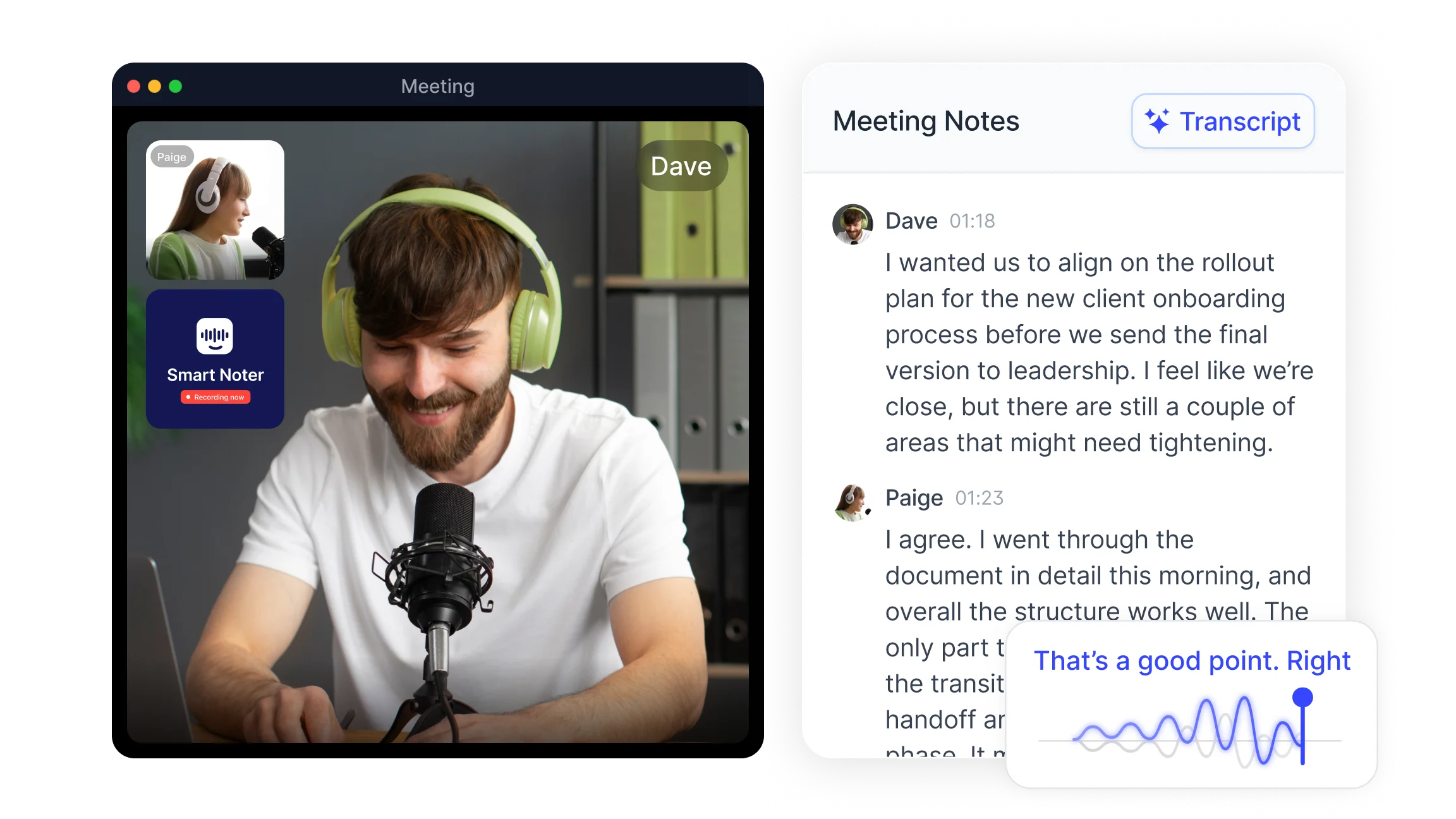
The transcribe meaning, in its simplest form, is the act of turning spoken language into written text. This can be done manually by a person listening and typing, or automatically through AI powered speech to text technology. The result is called a transcript: a written document that captures dialogue, speaker identities, and the sequence of what was discussed.
A clear transcription definition goes beyond just converting words. A complete transcript preserves context: who said what, at what point in a conversation, and what followed from it. This makes transcribed records useful not just for reference but for analysis, documentation, and accountability.
In everyday professional use, to transcribe a meeting means producing a written record of the full discussion so that decisions and commitments can be reviewed, shared, and acted on without replaying the audio. The transcribing meaning covers the ongoing process, while the final transcript is the structured output.
Transcription is used across legal proceedings, medical consultations, academic research, media production, and business communication. In each context, the core purpose is the same: converting spoken content into a permanent, readable form.
How Transcription Works in Business Settings?
In business environments, transcription converts recorded meetings, client calls, interviews, and presentations into structured text documents. These documents typically include speaker labels, timestamps, and written dialogue organized in the sequence it occurred.
The practical value of a business transcript comes from what it enables after the conversation ends. A searchable transcript lets teams find a specific decision, quote, or action item without scrubbing through a full recording. A timestamped record resolves disputes about what was agreed. A shared document keeps remote or asynchronous team members informed without requiring a follow-up call.
Common business content types that benefit from transcription include:
Team meetings and project reviews where decisions and task assignments need to be documented accurately for follow-up.
Client calls and discovery sessions where detailed notes on requirements, objections, and next steps determine how a deal or project progresses.
Interviews and hiring discussions where consistency and accuracy in capturing candidate responses matter for fair evaluation.
Webinars and training sessions where the content has ongoing reference value beyond the original audience.
Board meetings and compliance recordings where a verifiable record is required for governance or regulatory purposes.
AI transcription handles these use cases at scale. Where manual transcription is time-consuming and resource-intensive, AI powered transcription services process recordings in minutes, supporting +98 languages and reaching up to 99% accuracy with clear audio. Smart Noter's audio to text feature covers recorded files across all these formats without requiring manual effort from the team.
Why Sales Teams Use AI Call Transcription?
Sales conversations contain more structured information than most teams realize. Every discovery call includes statements about budget, timeline, authority, and need. Every objection surfaces a specific concern that shaped the deal outcome. Every follow-up commitment becomes either a tracked action or a missed opportunity depending on whether it was captured.
AI call transcription converts these conversations into searchable, reviewable records that sales teams can use across four areas:
Complete call documentation without manual note-taking
Sales reps who take notes during a call split their attention between listening and writing. This reduces the quality of both the notes and the conversation. When a call is transcribed automatically, the rep stays fully present in the discussion while a complete written record is produced in the background. After the call ends, the transcript and summary are ready for review, CRM update, and follow-up without additional effort.
Identification of objections, buying signals, and competitor mentions
A transcript makes the content of a call searchable across the full conversation history. Sales managers can search for specific phrases, objection types, or competitor names across dozens of calls to identify patterns that individual reps might not notice. This produces actionable intelligence on where deals stall, what language moves conversations forward, and how the team's messaging lands in practice.
Coaching based on specific timestamped moments
Written transcripts allow managers to leave precise feedback on exactly what was said and when. Rather than general feedback after a call review, coaching becomes specific: a particular response to an objection, a missed follow-up question, or a moment where the rep could have introduced a next step. This level of specificity is only possible when the full conversation is available in text form.
Replication of effective approaches across the team
When a rep handles a difficult objection well or moves a stalled deal forward, that moment can be extracted from the transcript and shared as a reference. Over time, a searchable library of strong call examples becomes a practical training resource that new and existing reps can study without sitting in on live calls.
Smart Noter's sales team transcription workflow covers all of these areas. Calls are recorded and transcribed automatically, speaker labels identify each participant, and AI generated summaries extract the key points and next steps without requiring the rep to write anything after the call.
How Smart Noter Supports Sales Teams After Every Call?
The documentation that follows a sales call determines whether the insights from that conversation are used or lost. Smart Noter captures the full recording, produces a timestamped transcript with speaker identification, and generates a structured summary that includes decisions made, open questions, and action items with owners.
For sales teams operating across Zoom, Google Meet, or other platforms, Smart Noter integrates directly so that every call is captured without requiring a manual recording step. The transcript and summary are available immediately after the session ends and can be exported as PDF, DOCX, or plain text for sharing or CRM entry.
Teams looking to build a consistent documentation practice across sales calls, client meetings, and internal reviews can use Smart Noter's transcription feature as the foundation. Each call becomes a structured record that feeds into pipeline reviews, onboarding materials, and coaching programs rather than disappearing after the conversation ends.
