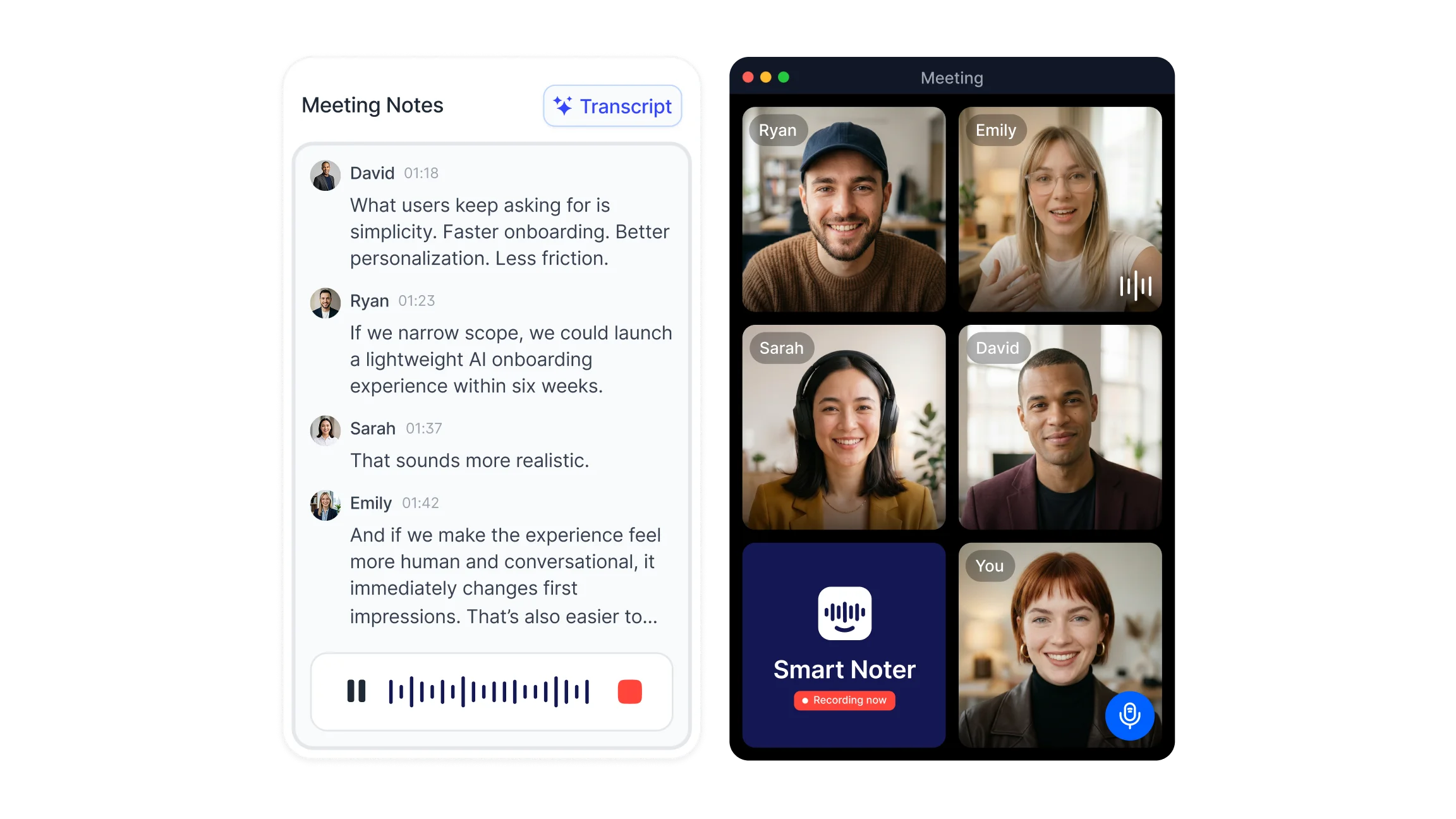
Speaker Identification Vs Speaker Diarization: What Is The Difference?
Speaker identification enables AI systems to tell voices apart and show labels such as Speaker A or Speaker B in the transcript. This makes transcripts easier to scan and analyze for tasks like assigning action items or reviewing statements. Many users confuse this with speaker diarization, so a clear distinction helps.
Speaker diarization splits audio into segments by speaker activity, while speaker identification assigns consistent names or roles to those segments. In practice, diarization usually runs first to separate speech segments. Identification then groups those segments and applies labels. Together, they support accurate multi speaker transcription and improve the usefulness of ai transcription with speaker identification.
Diarization: Breaks audio into speaker segments | Produces timeline of who speaks when
Identification: Matches segments to specific speakers or consistent labels | Produces named or labeled transcript entries
How Speaker Identification Works In AI Transcription?
AI transcription systems follow a step by step workflow to identify speakers and keep labels consistent across the transcript. The process relies on audio analysis and pattern grouping to turn raw speech into labeled text, whether the source is a live recording or an uploaded file.
Voice Activity Detection (VAD)
Voice Activity Detection first finds where speech occurs in the recording. VAD separates speech from silence and background noise, producing a timeline of speaking activity. This timeline defines segments for later analysis and helps the system ignore non speech sounds when performing speaker identification in speech recognition workflows.
Feature Extraction And Voice Fingerprinting
Next, the system analyzes vocal features to create a unique signature for each voice. Key features include pitch, tone, cadence, and spectral patterns. These attributes form a kind of voice fingerprinting AI profile for each speaker. The profiles are not names by themselves but allow the system to tell one speaker from another as raw speech moves through audio to text processing.
Speaker Clustering And Labeling
After extracting features, the system groups similar segments using clustering algorithms. Each cluster represents one speaker and receives a consistent label such as Speaker 1, Speaker A, or a role based tag if available. When reference audio or metadata exists (for example, a labeled sample or roster), the system can map clusters to real names, enabling speaker labeling in transcription.
Key Benefits Of Speaker Identification In AI Transcription
Improved readability: Labeled transcripts make it fast to scan conversations and find specific contributions.
Clear accountability: Assigning statements to speakers supports follow up and record keeping.
Faster workflows: Teams spend less time replaying recordings to confirm who said what.
Better search and analysis: Speaker labeled text enables role based searches and easier extraction of action items.
Consistent documentation: Meetings, interviews, and podcasts gain structured, searchable records suitable for archives or compliance.
Common Use Cases For Speaker Identification
Meetings: Track decisions and assign action items by speaker, then turn labeled transcripts into concise meeting summaries for the wider team.
Interviews: Attribute quotes accurately for reporting, research, or publishing.
Podcasts and Panels: Produce episode transcripts that identify hosts and guests for notes and show notes.
Legal and Compliance: Maintain records that link statements to individuals in depositions or hearings.
Education and Lectures: Separate instructor comments from student questions for study materials and summaries, a pattern common among education teams reviewing recorded classes.
Factors That Affect Speaker Identification Accuracy
Audio quality: Clear recordings with low background noise yield better results.
Microphone placement: Consistent microphone use reduces voice overlap and improves separation.
Number of speakers: Accuracy can decline with many simultaneous speakers or rapid speaker changes.
Speaker similarity: Voices with very similar characteristics are harder to distinguish.
Overlapping speech: When speakers talk at once, segmentation and labeling become more difficult.
Language and accent variation: Models trained on diverse speech data handle accents and languages more reliably, but rare or mixed languages can lower performance.
When To Use Speaker Identification In Transcription Workflows?
Speaker identification is useful when knowing who spoke matters for decision making or record keeping. Enable it for multi person meetings, interviews, roundtables, and podcasts where attribution, action items, or searchable speaker based notes are needed. For single speaker recordings or casual voice memos, plain transcription without speaker labels may be sufficient. In real time settings, speaker tracking can run when live clarity of roles matters, provided audio conditions support reliable detection.
Smart Noter supports structured ai transcription with speaker identification across meetings, interviews, and collaborative workflows. Recordings can be uploaded directly or processed through the transcribe workflow, which applies consistent speaker labels, timestamps, and synchronized playback to make review and follow up efficient. By providing clear speaker labeled documentation, Smart Noter helps organize multi speaker conversations into usable meeting notes and actionable records.
